Introduction
What is Artificial Intelligence and Machine Learning?
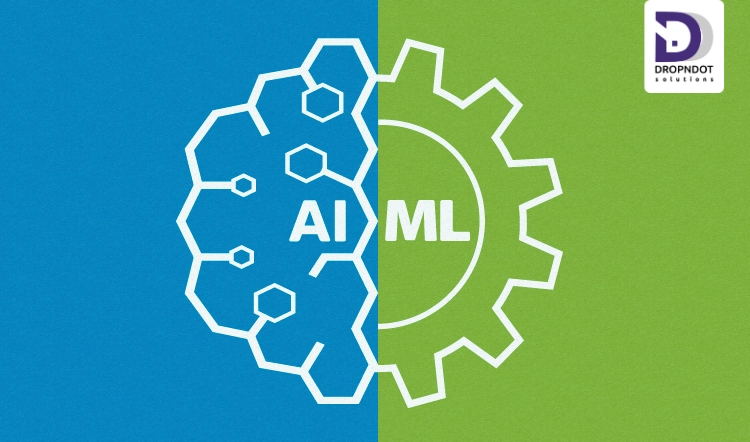
Nowadays, two fields Artificial Intelligence and Machine Learning are adjacent but very different from each other, conforming to modern tech. AI refers to the broader idea of machines performing tasks in a manner that we would deem “intelligent”. AI Vs ML Let us tell you that AI is the broader concept, and has more general terminology. In contrast, machine learning (ML) is one aspect or subset that falls closer to the category specializing in creating algorithms so that systems can learn from said data asynchronously. The origins of AI stretch back to the 20th century when greats such as Alan Turing and John McCarthy started work on the technology that will grow to shape our world today.
The Present Impact of AI and ML on Technology
Artificial Intelligence and Machine Learning essentially are overused buzzwords but in reality, these are key technologies transforming the modern technology landscape. Across industries, from healthcare and finance to retail and manufacturing — organizations are using data-driven decision-making & machine learning for the accelerative level of innovation. For healthcare, Artificial Intelligence and Machine Learning have allowed for precision diagnostics as well as personalized treatment plans whereas in finance it has permitted fraud detection to be improved alongside systematic trading strategies. This article is written with the sole intention of explaining how AI & ML are disrupting these industries and more, and in doing so transforming our relationship with technology by setting a course towards creating an era where everything we use becomes intelligent.
The Foundations of AI and ML
The Foundation Of AI
Several key concepts at the heart of Artificial Intelligence and Machine Learning will provide some foundational knowledge to intelligent systems. Concepts like machine perception are where machines can understand their world by taking data such as images and sounds, which manifest in technologies including computer vision or speech recognition. In the case of reinforcement learning in both AI and machine or traditional models, the reasoning is basically to derive the logical inference based on the right principle while learning refers to the ability to improve by experience. One key ingredient from the software development side is natural language processing (NLP), which provides machines with human-like understanding and generation of text.
These are achieved using different AI implementations and models like Expert Systems to duplicate the way human decisions can be taken for specific regions, Neural Networks that imitate how brain structure is used in information processing, and Deep Learning Models that have multiple neural network layers with the ability to learn complex data. These elements in concert serve as the infrastructure for AI itself allowing this technology to reinvent modern tech.
The Brain Behind AI: Machine Learning
Artificial Intelligence and Machine Learning ML would be at the root of the AI ladder. Essentially, we (developers) create algorithms such that systems can learn and get better over time from the data they observe. This is primarily what powers Machine Learning! Those algorithms fall into Supervised Learning where the model is trained on labeled data, Unsupervised learning which looks for patterns in unlabelled data, and Reinforcement Learning where an agent learns to make decisions interacting with the environment trying to maximize rewards.
At this juncture, the role of big data and data science becomes integral to churning out ML-relevant features based on Big Data since enormous volumes of digital age data are at disposal as raw material from which training may be carried ahead using one or more ML models. Using this data as a basis and drawing predictive inferences on it, AI systems can handle more complex tasks like image recognition, language translation, and getting insights from large pools of historical information with an efficiency that improves over time.
AI and ML Synergy
How the symbiosis of AI and ML is revolutionizing smart technologies today Machine Learning; a key enabler of AI, where all Artificial Intelligence systems learn from experience to improve their performance without explicit programming. Substantial ML algorithms are the basis of AI technologies like rideshare apps, and self-driving cars that can detect a massive amount of sensor data and make immediate driving decisions. Similarly, machine learning models drive AI applications like chatbots and virtual assistants in Natural Language Processing, enabling the application to understand human queries better. This creates a co-evolution of AI capabilities that not only makes stronger offerings but faster iteration, resulting in major transformations across all forms of technology we use now from personalization for e-commerce to sophisticated medical diagnosis.
AI and ML in Transforming Key Technological Fields
Software Development and IT Operations (DevOps)
Artificial Intelligence and Machine Learning are changing the way software development operations are monitored through intelligent automation. It also enjoys the other side of DevOps and faces no issues in automating processes including code generation, testing as well deployment ensuring more efficient cycles for development. AI-powered tools write code and test them with little human intervention. On the other hand Machine Learning is an elemental piece of predictive analytics for IT operations or AIOps. ML models can predict system failures, allocate resources more efficiently, and otherwise optimize the most out of your IT infrastructures far better than humans.
Cybersecurity
Artificial Intelligence and Machine Learning are essential components in the cybersecurity landscape to detect threats and respond more quickly as well. AI-powered security systems examine the traffic that is entering and leaving a network to spot irregularities, this way potential threats in real-time can be identified which helps organizations reduce cyber incident response times greatly. These models continually learn from new data, which allows more recent threats to be accounted for and ensures that the detected results improve in accuracy over time. That ability to change is key; the security challenges that companies of all sizes face are evolving too quickly for traditional protocols and approaches. AI and ML in cyber defense create a stronger system incorporating prediction, detection, and mitigation of threats before the occurrence of harm.
Autonomous Systems and Robotics
Autonomous systems and robotics continue to advance thanks largely in part to Artificial Intelligence and Machine Learning, such as autonomous vehicles, drones, and industrial robots. AI allows these systems to analyze and act upon environmental data— such as its ability to drive through a city— without human intervention. A significant way of enhancing accuracy and efficiency is machine learning in general, and more so by these autonomous machines. For instance, you use ML models to understand sensor data when using autonomous vehicles and leverage the model to recognize objects quickly for making driving decisions. In robots, ML empowers the mechanic processes leading to performing a wide range of tasks with better and improved accuracy. These new data-driven, real-time decision-making, and automation advances not only improve what autonomous systems and robotics are capable of but also change many industries as well as everyday life.
Data Analytics and Business Intelligence
Artificial Intelligence and Machine Learning have radically changed data analytics in BI with an ever-increasing necessity, especially when it comes to the analysis of big data also assisting real-time decision-making. These tools can find patterns and insights hidden in mountains of data that are simply impossible to reveal for humans. For businesses that want to respond in a data-informed, real-time way — the ability to aggregate millions of individual decisions is gold. Machine Learning models take this up a notch giving organizations the power of predictive analytics, helping them predict trends, detect opportunities, and manage risks. From supply chains to customer experiences and financial forecasting; AI is changing how organizations use data to get ahead.
Revolutionizing Consumer Technologies
Home Automation and Personal Assistants
The core of the smart home technologies and personal assistants revolution are Artificial Intelligence and Machine Learning which change how consumers interact with their environments. AI and ML are used in voice-activated assistants such as Alexa, Siri, or Google Assistant to make it possible for our devices to make it easier for us: Simply demanding what we want and holding a natural conversation language. Over time, these assistants enhance their predictive capabilities by learning from user interactions and as a result can recommend better suggestions or execute commands more accurately. Moreover, AI & ML capabilities are expected to work in the direction of intelligent home automation systems that flow lighting temperature security entertainment features, providing personalized and responsive living spaces, making lives a whole lot more comfortable and effective.
Personalized User Experiences
We can observe the power of Personalized User Experiences with Artificial Intelligence and Machine Learning across consumer technologies such as apps (with recommendations), e-commerce platforms, content streaming services, etc. With AI, it uses algorithms that are driven by personalization to check user behavior, preferences, and interactions between them to provide personalized content, product recommendations, etc For example, in e-commerce ML models keep an eye on patterns of browsing and shopping to make product recommendations based on individual tastes which help increase user satisfaction as well as increased sales. In the same way, modern streaming services use AI for better content curation — be it in movies or music; each user gets a recommendation based on his historic movie view/listen. This unique degree of personalization became a common practice in modern consumer technology, offering better and more user-friendly experiences.
VR (Virtual Reality) and AR (Augmented Reality)
They are also transforming Virtual Reality(VR) and Augmented Reality(AR), making them more life-like in terms of experiences these technologies provide with the help of Artificial Intelligence(AI). Using AI to create artificially generated but very believable virtual environments and characters is expected to make the experience of users more immersive or engaging. This makes machine learning able to access user behavior and responses in these environments, it can respond effectively by making dynamic changes that would have users immersed. In VR gaming, AI can change the game environment according to player choices, or in AR it may use ML algorithms that improve how accurately and quickly digital information is placed on top of a real-world stop. The possibilities in VR and AR are enormous thanks to these developments, which are reflected not just in VR gaming but also in entertainment, and education — the list goes on.
AI and ML in Business and Industry
Revolutionizing the Healthcare Industry
The application of Artificial Intelligence and Machine Learning techniques is radically transforming the healthcare sector enabling major improvements in diagnostics, treatment planning as well as patient management. These systems are designed for medical image analysis, anomaly detection in images, etc, and can detect anomalies with much higher accuracy than traditional methods. In treatment planning, AI assists clinicians in creating individualized care plans as it analyses extensive patient data and ML models that forecast the results for patients along with recommending the best-suited kind of treatments. Personalized medicine is being fostered by ML, which tailors treatments to the genomics of individual patients for better outcomes. ML-based predictive healthcare allows for the early detection of diseases, before they occur and helps in managing chronic conditions by predicting deteriorating patient states.
Transforming Financial Services
Artificial Intelligence and Machine Learning are revolutionizing services in the financial sector, boosting fraud detection tools (which previously left several cracks to be exploited) and automating trading with robotic advisors while increasing customer service exponentially. Using artificial intelligence, these systems can keep track of a large amount of information coming in from different transactions and instantly detect patterns that human eyes may miss. Enter AI-driven algorithms that trade faster than human traders, which aim to get the best performance from an investment and in combination provide better returns. ML models are also vital in risk evaluation and monetary forecasting to maintain the finances & make details assumptions. What is more, with technology advancements powered by ML (Machine Learning), robo-advisors are democratizing investment management that provides tailored financial advice to everybody and not allowing refined levels of personal finance just for a select few.
Redefining Manufacturing
Automation and process optimization in manufacturing is redefined by Artificial Intelligence and Machine Learning. On assembly lines, AI-driven robotics take over increasing chunks of the work — smoothly and beautifully because robots don’t have bad days when they’re on a production line. Not only Automation, ML also helps in predictive maintenance which reads machinery data and predicts failures before they occur hence reducing downtime & saving huge on maintenance costs. ML is also leveraged in supply chain optimization, where it allows manufacturers to size up demand and manage inventory as well as logistics for the most efficient product availability path from production until delivery.
Retail and E-commerce
Artificial Intelligence and Machine Learning have been revolutionizing the retail and e-commerce markets, by significantly improving customer experience as well as streamlining operations across every level. By analyzing the behaviors and preferences of your customers, AI systems deliver personalized product recommendations that turn more visitors into satisfied buyers in style. Personalized marketing: ML models are used to identify which customers should receive specific offers at the right time, enhancing the overall efficiency of a marketing campaign. In inventory management, ML plays a pivotal role by predicting demands and determining the right stock level to keep products available for its customers at their timing needs along with wasting less of an excess in stocks and thereby costs.
Emerging Trends in AI and ML
Explainable AI (XAI)
Explainability and Interpretability have since surfaced as two of the major issues in AI decision-making with Artificial Intelligence and Machine Learning becoming essential to decision-making processes across all disciplines. Typical AI models specifically deep learning systems, act as a “black box” — while they can make decisions it is quite difficult to verify. The lack of transparency is a problem, especially in high-assurance areas such as health care or finance and law where the rationale for AI-based decisions must be understood. The promise of XAI — it could develop AI systems that can provide understandable explanations to their reasoning and decision-making. Recent developments in XAI range from techniques for explaining decision paths, simplifying intricate models, or developing algorithms that describe their reasoning using a human-understandable vocabulary.
AI in Edge Computing
With edge computing increasingly paired with Artificial Intelligence and Machine Learning, more processing work is done closer to the source, not in centralized cloud servers. This move is fuelled by the increased importance of performing real-time processing and decision-making in autonomous vehicles, smart cities, and IoT devices. Edge-based AI and ML (augmented) by the unprecedented processing power available today at edge, allows systems to analyze data locally — in near-real-time reducing latency while making decisions helping in absolute efficiency. For example, on autonomous vehicles AI at the edge enables immediate processing of sensor data which means fast decision-making for navigation and security. The same goes for real-time monitoring and managing urban infrastructures in smart cities with edge AI/ML computing.
AI Ethics and Governance
Artificial Intelligence and Machine Learning Literature have identified the significance of various ethical concerns arising as a result of advancements in technologies to ensure responsible use. Concerns regarding AI include bias in algorithms, data privacy, and the abuse of (potentially harmful) technologies leading to active global competition about them: most notably about the ethics and governance of AI. AI decision-making being hidden behind a mechanical wall, job displacement of autonomous control systems and the liability of how killer robots may target any human by mistake donate to this already elaborate ethical tapestry. Organizations are working on developing principles, frameworks, and regulations encouraging responsible AI development and deployment to counter this.
Challenges and Opportunities
The Technology and Infrastructure Constraints
Even though Artificial Intelligence and Machine Learning have been revolutionizing modern society, these still suffer from significant technological and infrastructural glitches. AI/ML limitations: The ability of AI and ML to successfully process information, understand unstructured data, train deep learning models, or the energy consumption derived from performing large-scale computations are other problems. Furthermore, the efficacy of AI and ML are highly sensitive to data quality (that is to say – garbage in equals a heaping mound of well-enriched manure out) as well as vast computational environments driven by GPUs or even more specialized hardware like TPUs. As a consequence, the data needs to be managed efficiently and AI systems must scale effectively this is an ongoing challenge that calls for new thinking about how we handle storage management and processing infrastructure of big scalable species.
Closing Skills Gaps and Workforce Readiness
The quick increase in usage of Artificial Intelligence and Machine Learning has resulted in a huge demand for professionals who are experts at developing, implementing & managing these systems. Unfortunately, a skills gap still exists in the workforce where key industries are finding it increasingly difficult to hire individuals with expertise working on AI and ML. To combat the problem, educational initiatives and training programs are under development to provide workers of tomorrow with essential skills. Whilst universities are adding AI and ML-focused specialized courses into their curricula, other online platforms also provide certifications along with boot camps in the same domain. These internal training programs are also being used to increase the skills of current employees.
Built for Innovation in the Future
Whilst challenging, Artificial Intelligence and Machine Learning offer immense opportunities for future advancements that can make a difference in many unexplored areas. First-generation AI (it has been around since the 1950s), centered on machine learning while holding high promise in industries as diverse as health care — for more accurate diagnostics and personalized treatments or breakthrough drug discovery. For environmental science, AI solutions could be beneficial in tackling world problems like climate change by predicting natural calamities and restoring energy by controlling physical resources. Moreover, AI and ML have the potential to stimulate deeper innovation in everything from education to transportation and smart cities — all with creative solutions that elevate quality of life while addressing dire social concerns. With the progress of research and development AI and ML, both can prove to be dominant factors in solving global challenges.
There is no disputing that Artificial Intelligence and Machine Learning have, quite literally, transformed technology as we know it — changing the face of nearly every sector from healthcare to finance; manufacturing to consumer tech. These are not only changing how we live in the world but also making a path for future technologies that could help deal with some of society’s most urgent problems. The potential of AI and ML must be appreciated, research into their use has to continue as they evolve at an exponential rate. The various possibilities and opportunities that AI & ML are going to open up in the future will be enormous, where being aware or keeping an eye on all this stuff which coming new day by day is gonna play might needed role in achieving those great places.